
Robotics
CNC Machining for Robotics Components
Robotics parts live at the intersection of precision and weight — end-effectors, housings and structural components machined in aluminum, titanium and engineering plastics, with DFM review to flag manufacturability risks while the design is still moving.
- End-Effectors & Grippers
- Lightweight Structures
- Prototype Iterations
- CMM Inspection
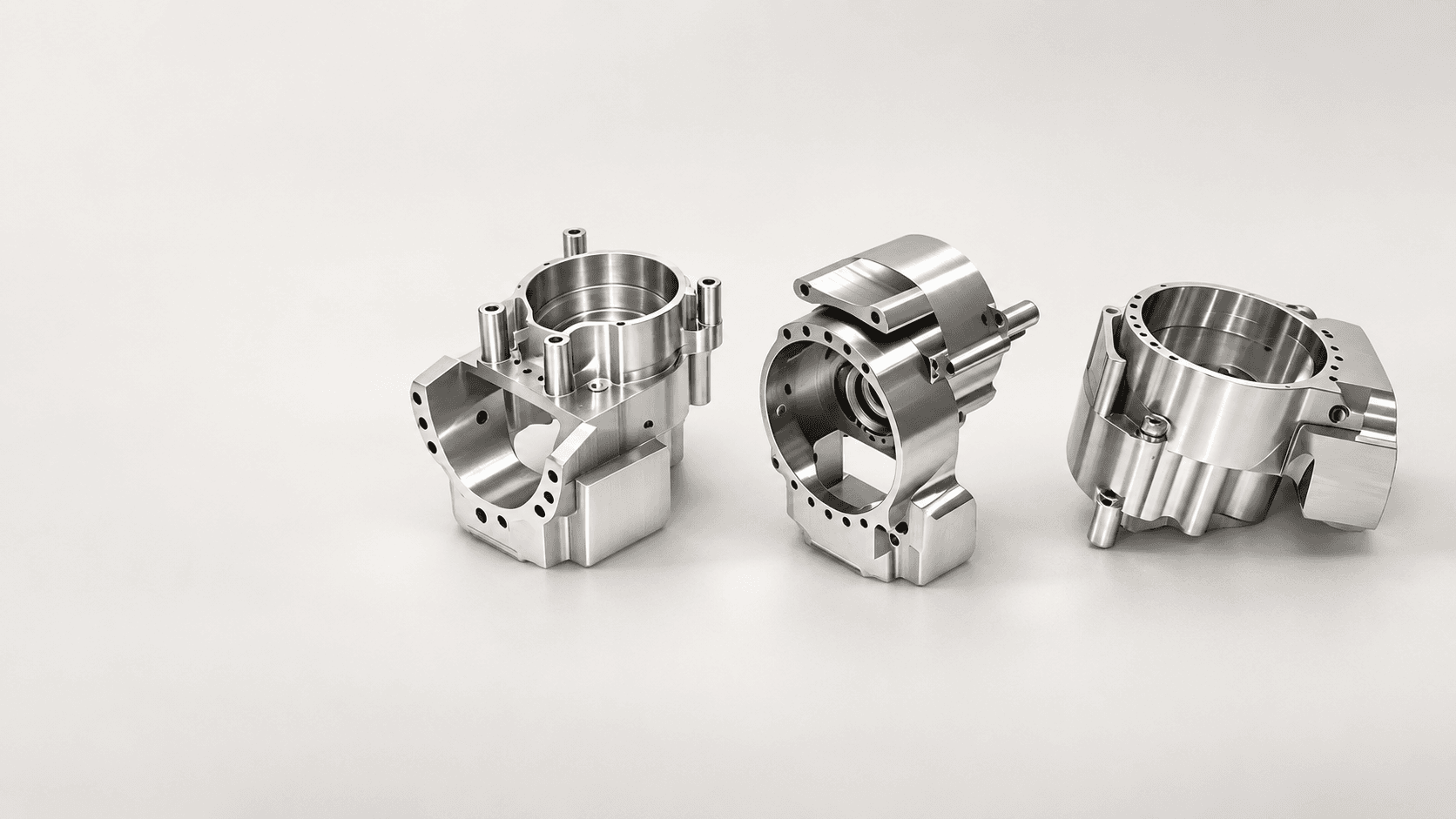
Typical components
Parts Robotics Teams Ask Us to Machine
From the end-effector out to the base: precision components whose interfaces decide how accurately the robot works.
- 01End-Effectors, Gripper Fingers & Tool-Changing Adapters
- 02Joint Housings, Gear & Motor Mounts
- 03Machined Link Arms & Structural Brackets
- 04Sensor, Camera & Encoder Mounts
- 05Custom Interfaces Between Robots & Tooling
- 06Enclosures & Covers for Controllers & Peripherals
Project requirements
What Robotics Projects Usually Need
Lightweight, precise and still changing — the three conditions robotics machining is set up around.
- 01
Weight Where It Matters
Pocketing, wall thickness and material choice — commonly 7075-T6 aluminum or titanium Grade 5 — are assessed for stiffness and manufacturability during DFM review, before anything is cut.
- 02
Precision Interfaces
Joint, motor and encoder mounting faces and hole patterns carry the accuracy of the whole assembly. They are planned as critical features and verified accordingly.
- 03
Iteration Speed
Development drawings change often. Prototype lead times of 4–7 working days and DFM feedback with the quotation shorten every design loop.
- 04
Appearance Counts Too
Visible parts can be anodized or bead-blasted in the same project, with appearance requirements confirmed separately from functional surfaces so both are controlled deliberately.
Quality control
Inspection Planned Around Interfaces
Inspection planning follows the faces, bores and hole patterns that locate one component against the next.
- 01Drawing-based inspection
- 02Interface & hole-pattern verification
- 03CMM measurement of critical dimensions
- 04Datum relationship review
- 05Finish & appearance review where specified
- 06FAI & dimensional reports
Production flexibility
From Development Iterations to Repeat Supply
Prototype quickly while the design moves; keep the approved revision as the basis once it settles.
- 01
Prototype
Components for design validation, payload and fit testing, and each new revision of a developing system.
- 02
Low Volume
Controlled quantities for pilot robots, beta units and first customer deployments.
- 03
Repeat Production
Ongoing supply of approved components, reproduced from the last confirmed drawing revision.
FAQ
Frequently Asked Questions
- 01
Which robotics components do you machine?
End-effectors and gripper components, joint and drive housings, motor and sensor mounts, structural brackets and link components, and the custom adapters that connect standard robots to your specific tooling.
- 02
Can you machine lightweight parts without giving up stiffness?
Lightweighting is reviewed together with the design: pocketing, wall thickness and material choice — commonly 7075-T6 aluminum or titanium Grade 5 — are assessed for stiffness and manufacturability during DFM review, before anything is cut.
- 03
Our design is still changing — can you support iterations?
Yes. Development work is prototype-led: small quantities, drawing and DFM feedback with the quotation, and confirmed requirements carried forward so the next revision starts from the last approved version, not from zero.
- 04
Can visible robot parts be finished to a presentable standard?
Yes. Finishes such as anodizing and bead blasting are coordinated with machining in the same project; appearance requirements are confirmed separately from functional surfaces so both are controlled deliberately.
Start a project
Have a Robotics Project?
Send us your drawings, quantities, materials and key requirements. Our team will review the project and provide manufacturing feedback with a quotation.
NDA available before drawing review.