
CNC Turning
Precision CNC Turning
for Custom Parts
CNC turning support for custom shafts, sleeves, bushings, pins and other rotational components, with drawing review, manufacturing planning and dimensional inspection considered as part of the project.
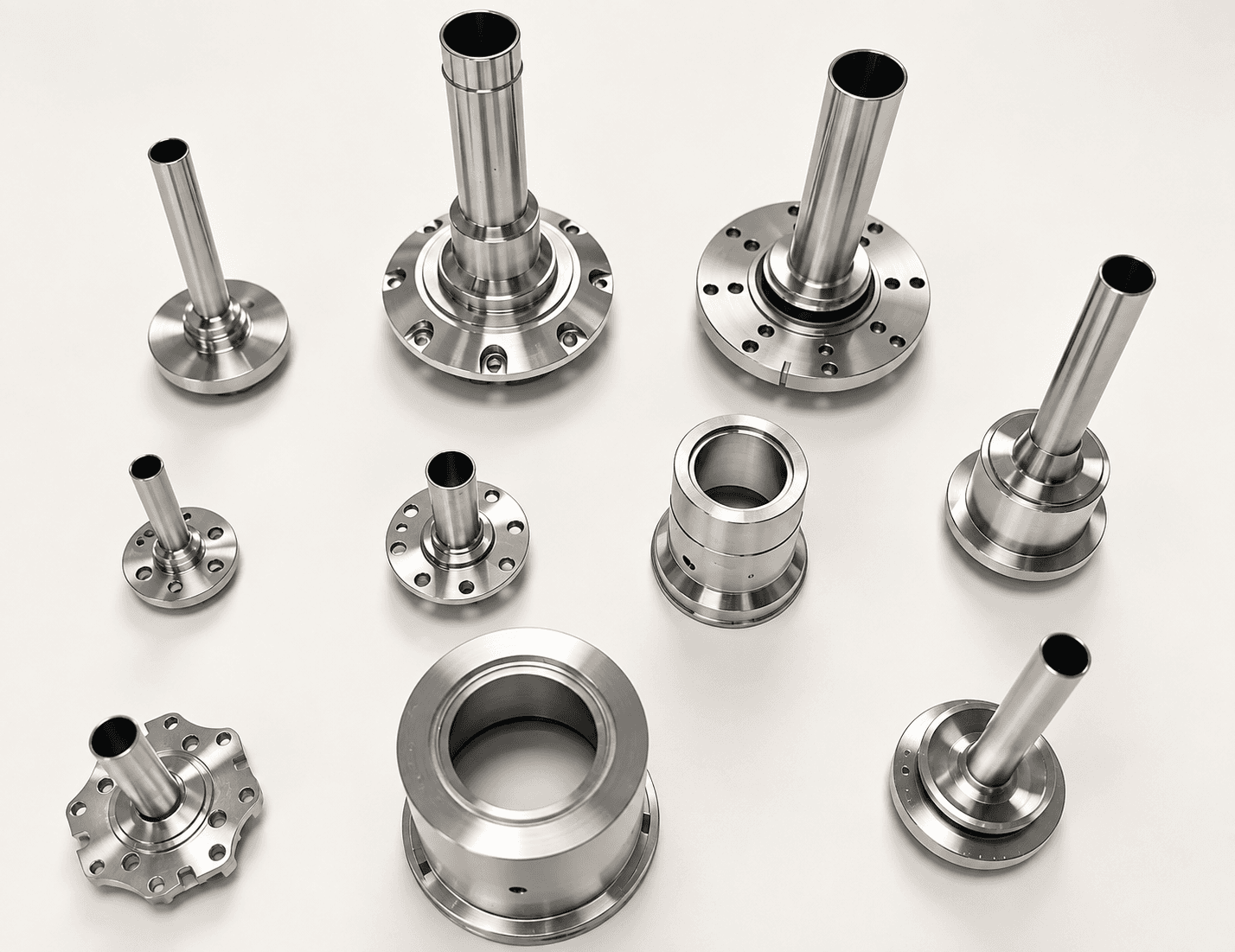
Turning capabilities
CNC Turning for Drawing-Driven Parts
The manufacturing approach is reviewed around rotational geometry, feature relationships, material, dimensional requirements and production quantity.
- 01
OD & ID Features
Outside and inside diameters can be reviewed together with shoulders, mating surfaces and related drawing requirements.
- 02
Bores & Internal Features
Bores, counterbores and internal transitions are considered according to access, depth and datum relationships.
- 03
Grooves & Threads
External and internal grooves or threads can be planned around the specified geometry and inspection requirements.
- 04
Stepped & Cylindrical Geometry
Multiple diameters, shoulders and cylindrical sections require a coordinated sequence that reflects the complete part drawing.
Rotational geometry
Built Around the Geometry of Your Part
Turned components are reviewed around the relationships between diameters, bores, shoulders, threads, grooves and datum features rather than treating each dimension independently.
- 01Shafts & Sleeves
- 02Bushings & Spacers
- 03Pins & Cylindrical Parts
- 04Stepped Diameters
- 05Bores & Internal Features
- 06Grooves & Threads
- 07Datum Relationships
- 08Secondary Milled Features
Material review
Materials for CNC Turning
Material selection is reviewed together with rotational geometry, feature requirements, surface finish and production quantity.
Aluminum Alloys
Stainless Steels
Carbon & Alloy Steels
Titanium Alloys
Engineering Plastics
High-Performance Alloys
Turning strategy
Turning Strategy Matters for Precision Parts
Turning quality depends on more than selecting an operation. Workholding, datums, OD and ID relationships, machining sequence and secondary features should be considered together before production.
- 01
Workholding Strategy
Plan how the component can be located and supported while maintaining access to the required turned features.
- 02
Datum Planning
Review drawing datums and functional interfaces before defining the manufacturing sequence.
- 03
OD / ID Relationships
Consider how outside diameters, bores and shoulders relate to common datum features and mating requirements.
- 04
Machining Sequence
Coordinate facing, diameter creation, boring and feature finishing around part geometry and access.
- 05
Thin-Wall Considerations
Review wall sections, support conditions and operation order when geometry may be sensitive to workholding or machining forces.
- 06
Secondary-Operation Planning
Identify flats, cross-holes, slots and other non-rotational features that require additional manufacturing steps.
Quality control
Inspection Planned Around Critical Turned Features
Inspection planning is reviewed together with the drawing, critical diameters, bore requirements, datum relationships and proposed manufacturing approach.
- 01Drawing-based inspection
- 02Diameter verification
- 03Bore and ID verification
- 04Thread requirements when applicable
- 05Datum relationship review
- 06Critical feature verification
- 07Documentation when required
Representative components
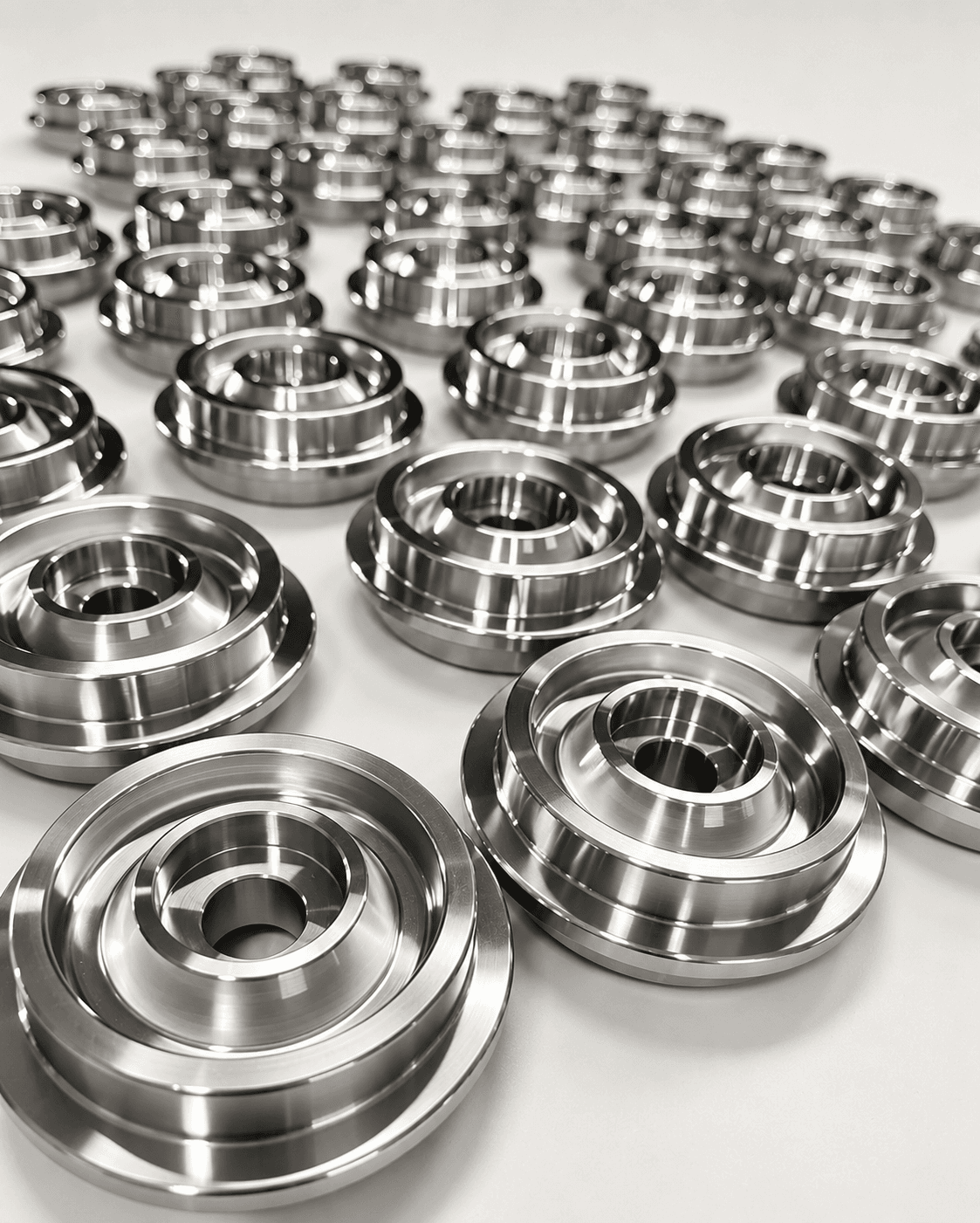
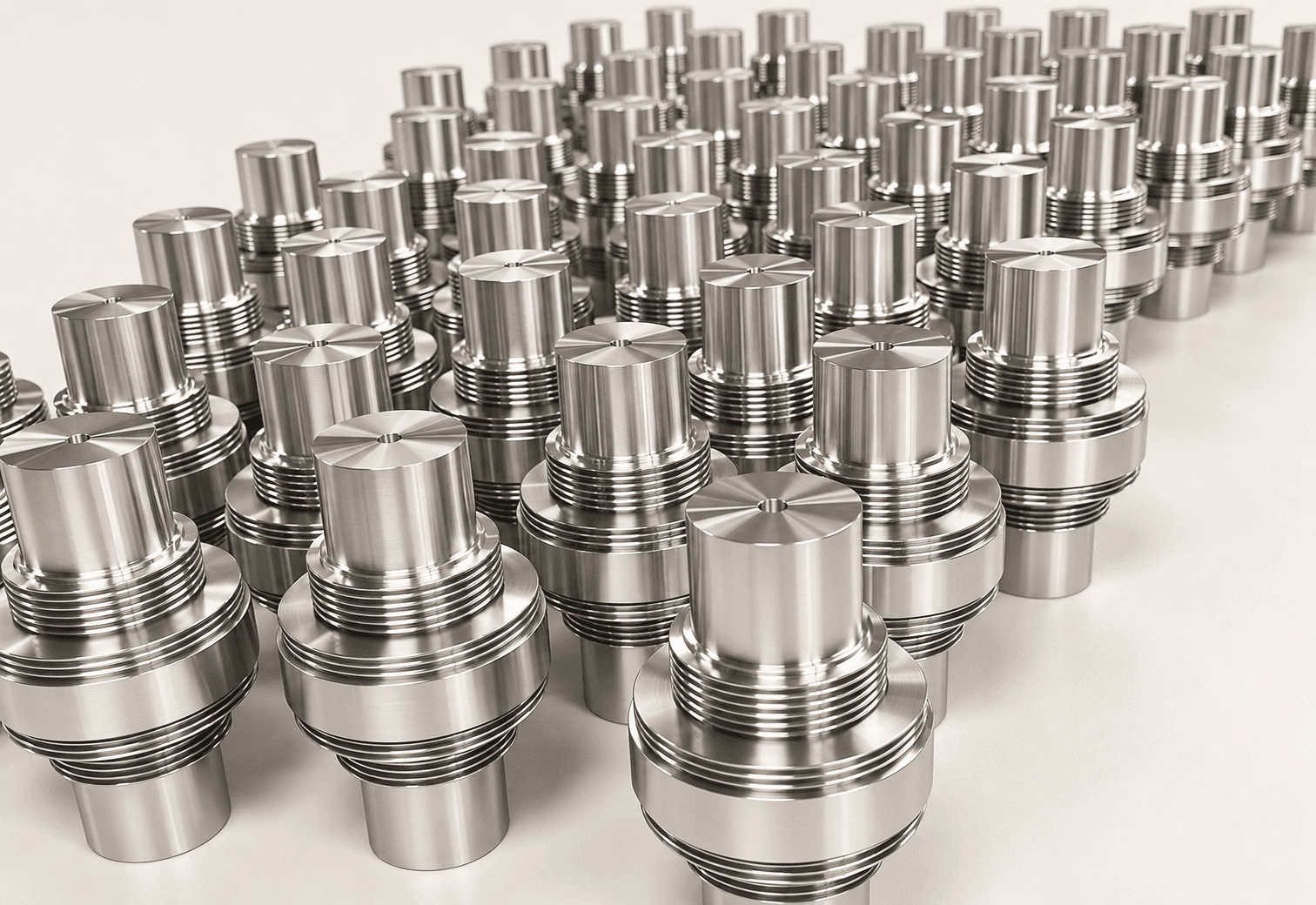
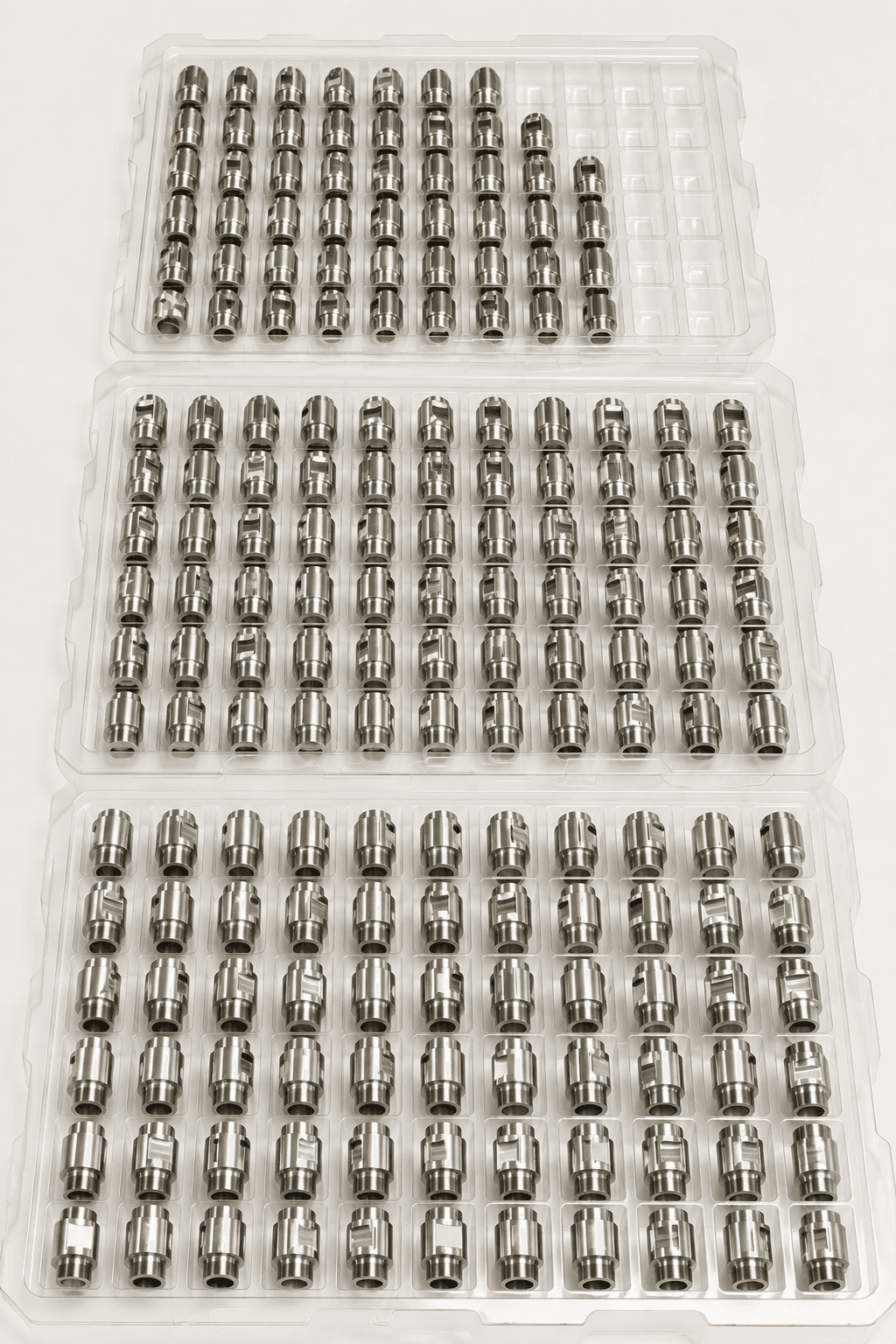
CNC Turning Examples
Representative components illustrate rotational geometry, stepped features, threaded requirements and secondary operations that may be reviewed for CNC turning projects.
Coordinated operations
Turning with Secondary Features
Some rotational components also require non-turned features. These requirements should be identified early so the complete manufacturing and inspection sequence can be reviewed around the drawing.
- 01
Flats & Milled Faces
- 02
Cross-Holes & Drilling
- 03
Slots & Relief Features
- 04
Threaded Side Features
Production flexibility
From Prototype to Repeat Production
Begin with the quantities needed for fit and dimensional review, then continue into low-volume or repeat requirements as the project develops.
- 01
Prototype
Turned components for dimensional review, fit checks and early project evaluation.
- 02
Low Volume
Controlled quantities for pilot builds, validation work and initial production requirements.
- 03
Repeat Production
Ongoing support based on confirmed drawings, reviewed requirements and established project information.
Start a project
Have a CNC Turning Project?
Send us your drawings, quantities, materials and critical requirements. Our team will review the project and provide manufacturing feedback with a quotation.